

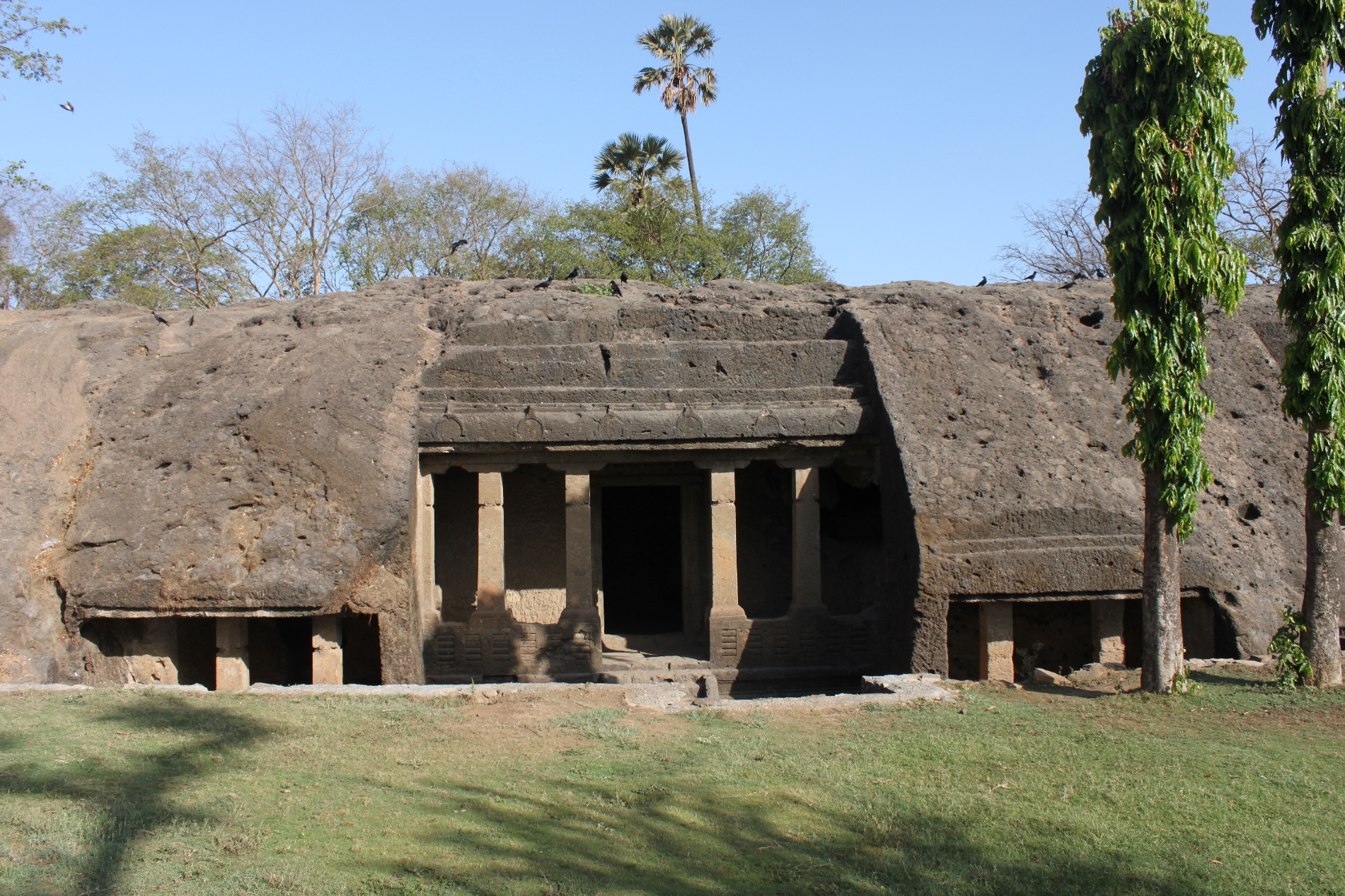
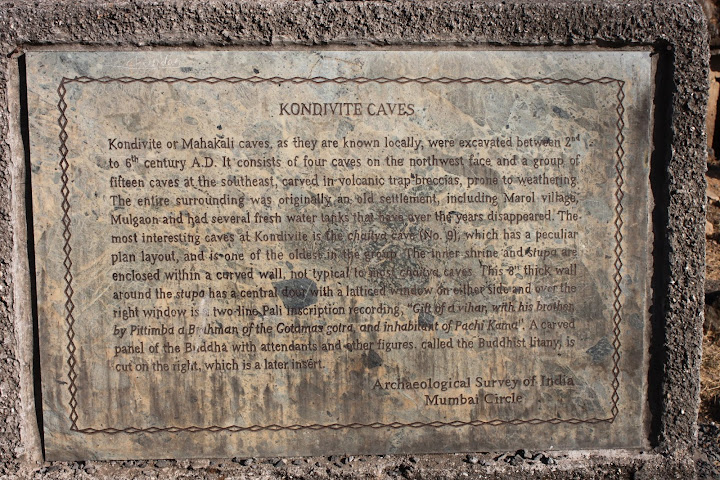
At present. these caves are locally known as Mahakali caves. These were referred as Kondivite or Kondivti caves by J M Campbell as these caves were near Kondivti village. There are total of 19 caves, fifteen on southeast face of the hill and four on the northwest face. These are situated on Mahakali hills in Mahakali region of Mumbai. You can reach these via Jogeshwari-Pawai (Vikhroli) Link road, take the right opposite to the Kamalistan Studio.
Kanheri had been a prominent Buddhist center from the ancient times and survived quite late till fifteenth century CE. Proximity of the Mahakali caves to Kanheri suggests that there was an another Buddhist congregation which might have some relationship with the bigger congregation at Kanheri. Whether there was any relation between these two congregations or not, it can be said with certainty that this area provided suitable grounds for setting up Buddhist monasteries and chaityas.
Past References:
S R Wauchop (1933, The Buddhist Cave Temples of India) – Wauchop refers these caves as the Mahakel caves and refutes the name Kondiwte previously given by Fergusson. Owing to simplicity of these caves, Wauchop assigns a very early date to these.
He provides dimension for cave 2 as 27 feet by 14 feet. Cave 8 is of special interest as that contains a rectangular room with a stupa in circular domes chamber, provided with two latticed windows and an inscription above one window.
He also describes cave 13 in detail which he considers of a more recent date.
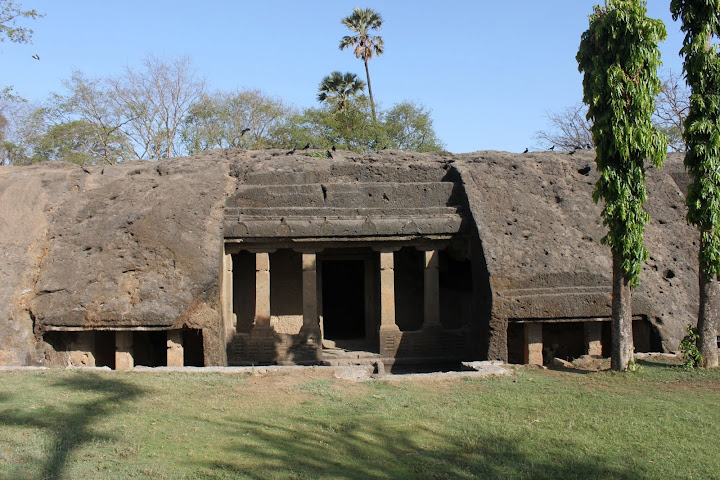
Cave 1, 2 & 3– This is the first cave group when you enter through the main entrance. There are three caves connected with each other. The middle one is the main cave and it consists of a open courtyard with a pillared portico, a rectangular hall with a seat for an icon on the western side. A stupa has been carved on the back wall behind this seat.
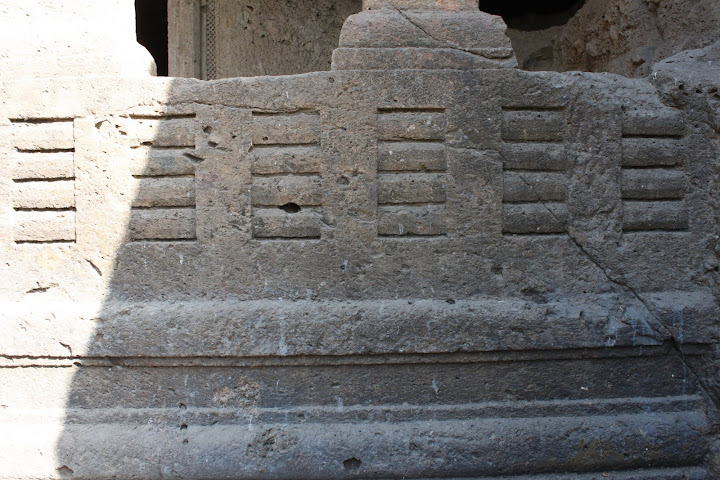
Portico has four pillars and two pilasters rising above a parapet carved with rail pattern. The pillars have square shaft broken in its upper part with a design so familiar with other similar architectural patterns. The capital is very primitive suggesting the early age of the excavation. A cell is provided in the left wall however it has a separate entrance from cave 2.
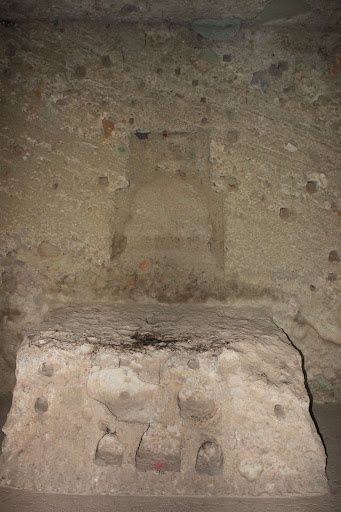
Entrance door of the hall is carved with chaitya windows above the lintel. It is decorated with various pattern on its jambs. The hall inside is 7 m deep and 4.2 m wide.
On either side of this unfinished central chaitya cave, are provided pillared entrances into cave 1 and 3. These entrances are at lower depth than the entrance of the chaitya cave which is in middle of these two lower entrances.
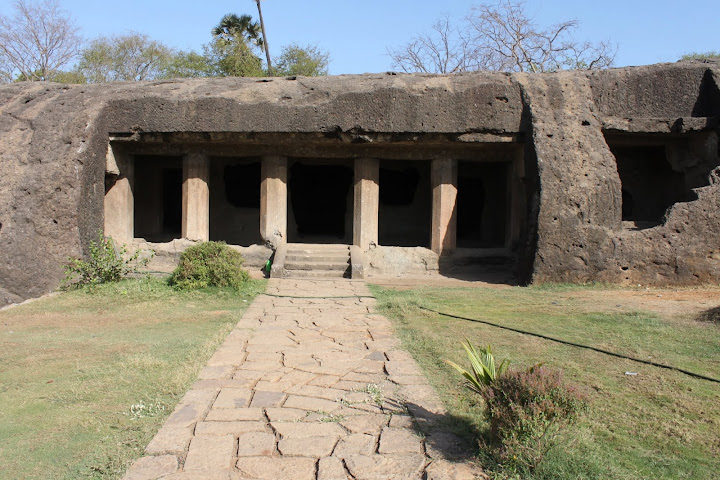
Cave 4 or the Vihara Cave – This vihara is entered through a verandah supported on four pillars and two pilasters. A flight of five steps leads a visitor to this entrance. The verandah is 11.1 m in breadth and 2.8 m in depth. The pillars are plain octagonal shafts without any capital.
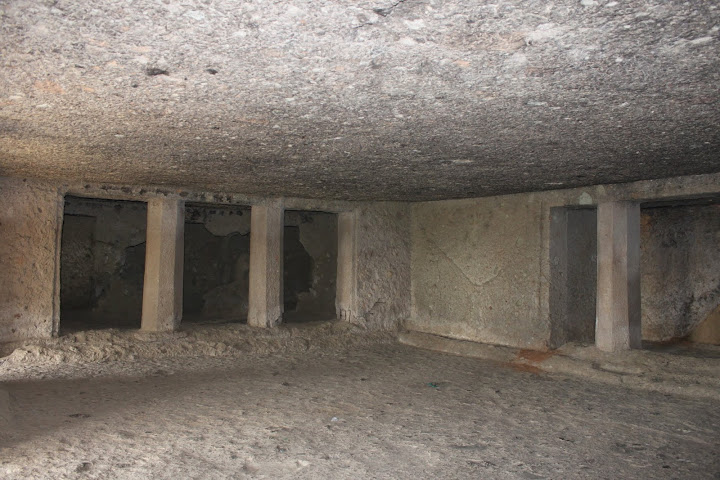
There are three entrances leading into a rectangular hall which is 11.2 m in breadth and 7.65 m in depth. On its lateral sides, there are chambers supported on two pillars and two pilasters. Inside these chambers are three cells each. Dr Qureshi mentions that usually in such viharas, the cells directly open into the hall, however here these open into a chamber which in turn connects to the hall.
On the back wall of the hall is provided a chamber supported on two pillars. However there are no cells provided in this chamber. The vihara is bereft of any decoration of sculptural embellishment.
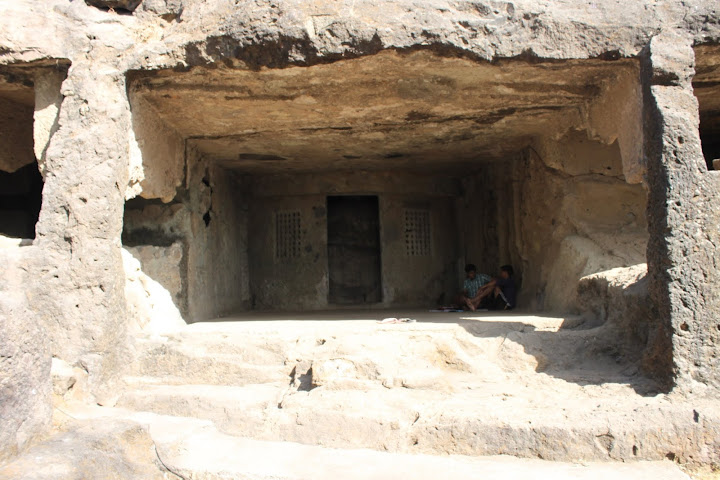
Cave 5 or the Chaitya Cave – This is the main cave of the group and probably the oldest excavation at the site. It faces east and entrance is provided from a rectangular hall. The hall is 5.4 m in breadth, 7.4 m in length. Usually this kind of hall has pillars on its entrance however here the hall is not supported on any pillars and is wide open on its eastern side.
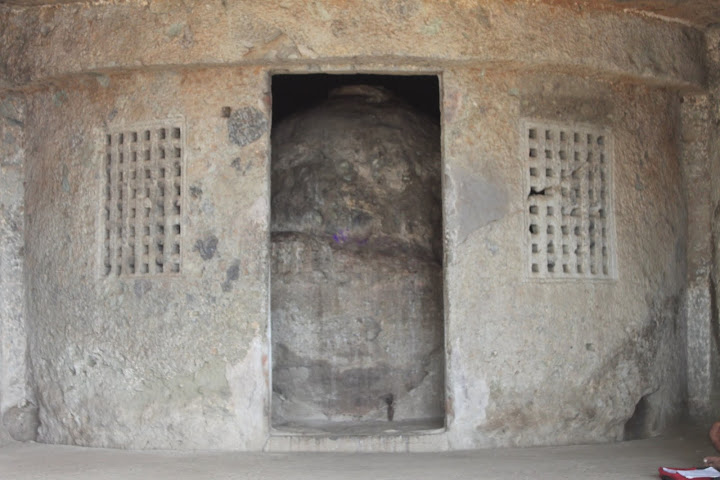
J M Campbell tells us that there are only two other parallels of this circular shrine like structure and both these are located in Bihar, Lomas Rishi cave and Sudama cave in Barabar hills near Gaya. Dr Dulari Qureshi says that this seems to the earliest chaitya in Western India. She further states that here we see the first structural departure from the Lomas Rishi cave in Bihar. Where in Lomas Rishi the entrance into the hall is provided from the side and the hall is executed in traverse, however here it is not the same. The hall and the inner chamber are aligned to the main entrance in the east.
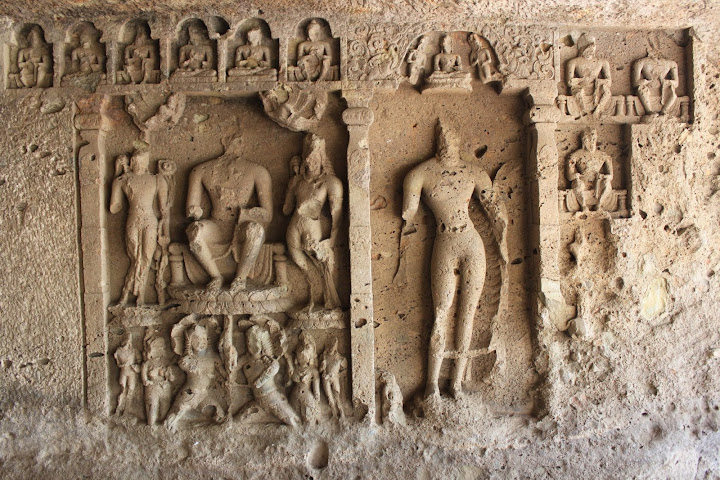
The inner chamber with stupa inside is enclosed by an circular wall, a feature not seen at any other place. The stupa is 2.35 m in diameter with a circumambulatory path around it. The walls of the hall were originally bare but carved with statues of Buddha during the late Mahayana phase.
Dr Qureshi writes that this stupa shrine is converted into a Shiva lingam and devotees offer prayers here. However during my visit to the site, I did not see such things. There was no door frame fixed to the entrance to the stupa chamber as mentioned by Dr Qureshi.
Inscription – J M Campbell mentions about a Pali inscription near the lattice window of this circular shrine. He mentions that the characters are very similar to the third century CE Rudradaman inscription of Girnar. Bhagvanlal Indraji translates the inscription as, ‘Gift of a vihara, with his brother, by Pittimba, a Brahman of Gautama gotra, an inhabitant of Pachi Kama‘. Pachi Kama probably is present day Pachmarhi.
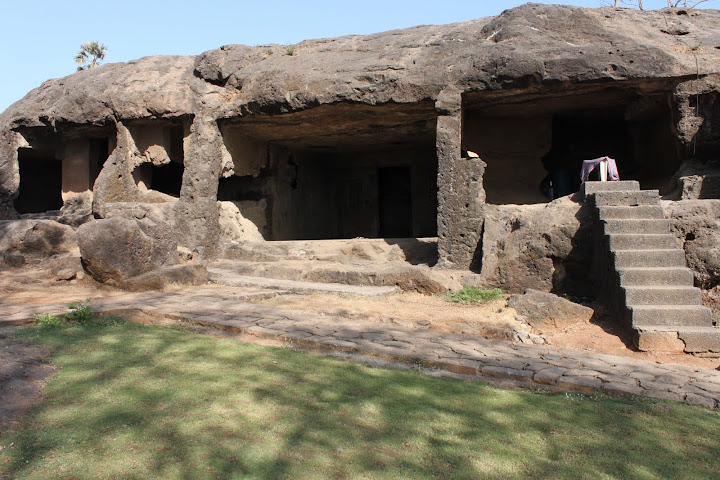
Cave 9, 10 and 11 – These three excavations are in a group like cave 1, 2 and 3. All caves were provided entrances into their respective courtyard which was not supported on any pillars or pilasters. These are bereft of any decoration.
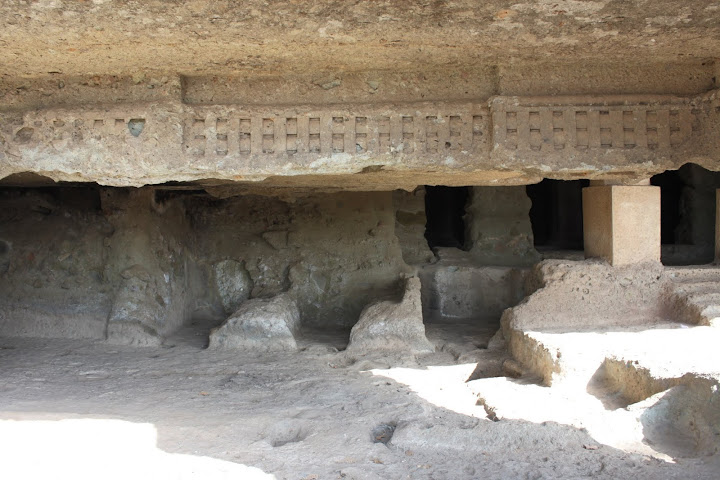
Cave 12 – Not much is left of this cave, however the rail pattern carved above the stone screen is still intact and worthy of praise.
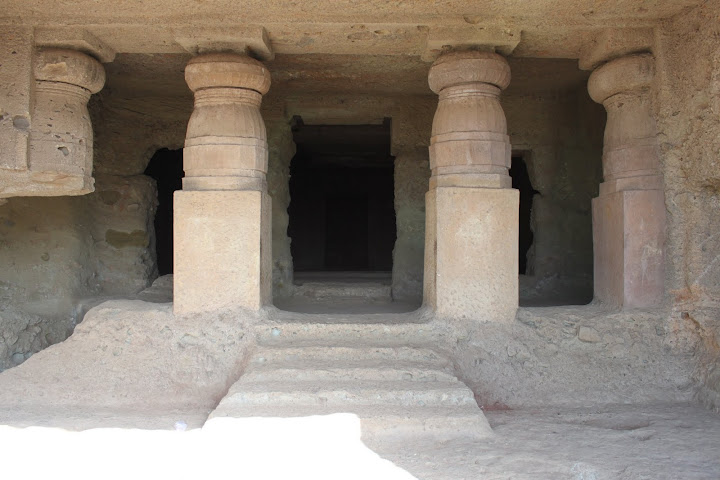
Cave 13 – Flight of five steps leads into a enclosed courtyard where a further flight of four steps leads into a pillared verandah. A stone bench is provided on the right side of the courtyard. Courtyard is 6 m in breadth and 3.8 m in depth. The pillars supporting the roof of verandah have circular amalaka pattern capital.
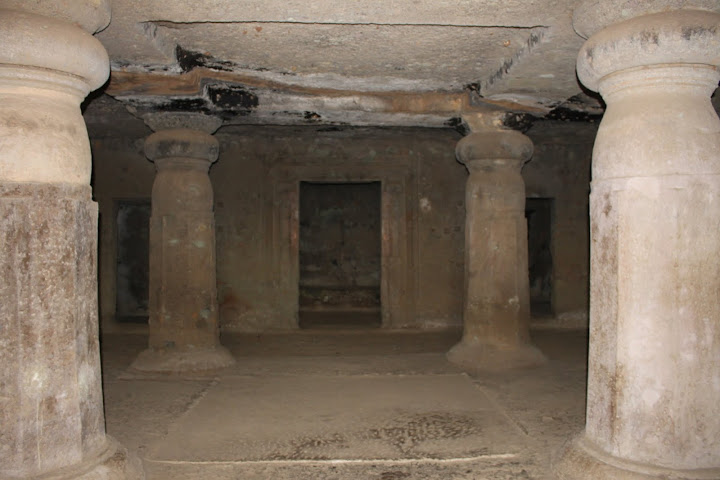
There are three entrances into the main hall. The hall is a square of 8.8 m. A raised platform is there in the center of this hall. It is supported on four central pillars. Pillars have round base, then octagonal shaft turning circular going up, topped with amalaka pattern abacus. This raised platform inside the hall allowed space all around the platform.
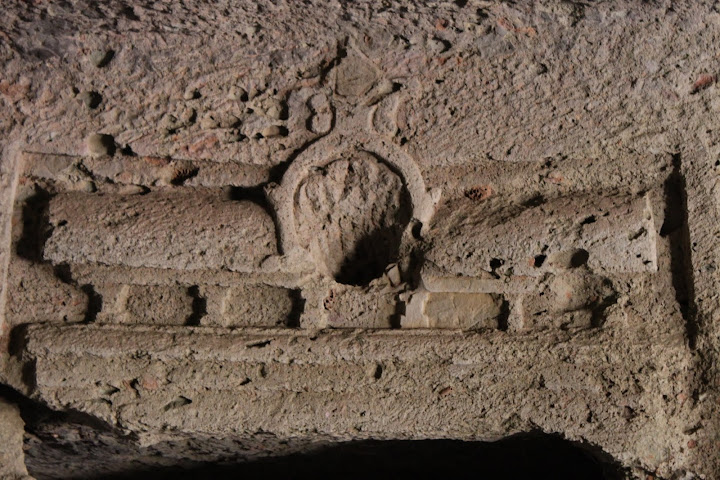
There are total eight cells inside the hall, three on left and right side and two on the back wall on the either side of the shrine. Except the central shine in the back wall, doors of other cells are very plain.
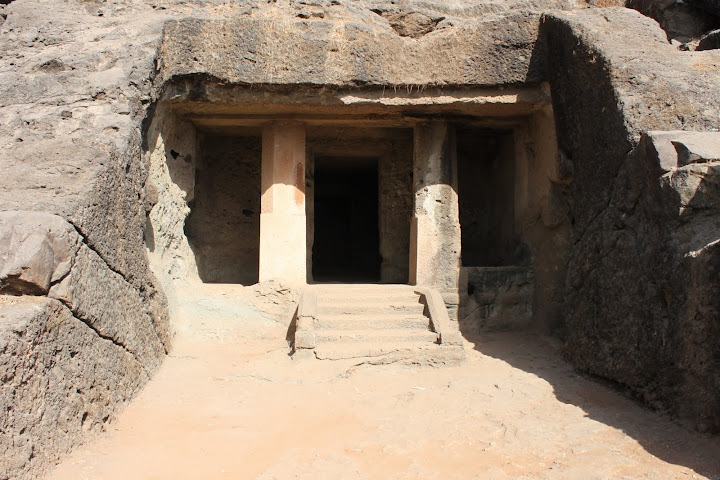
Cave 14 – This cave has a verandah supported on two pillars and two pilasters. A single entrance leads into a rectangular hall. There is a cell in center of the back wall of the hall. The door of the cell is decorated with similar patters seen on other doors at the site. A cell is provided on the right wall of the hall, the left wall is plain without any cell.
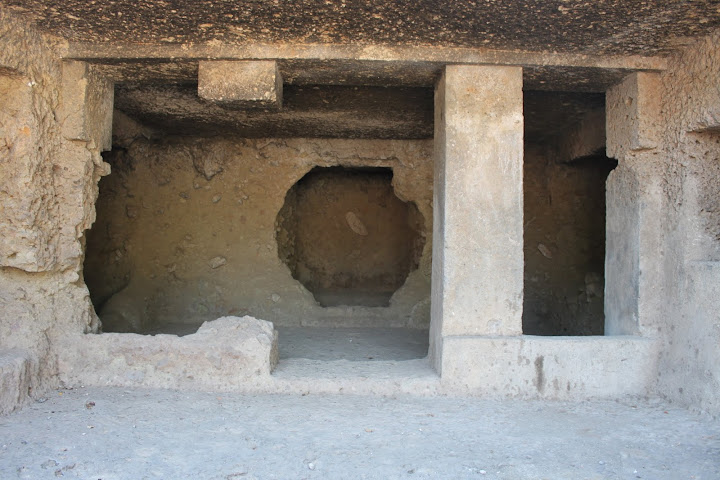
Cave 16 – Plain cave with a verandah, hall with a shrine. Cells are provided on the walls of the verandah.
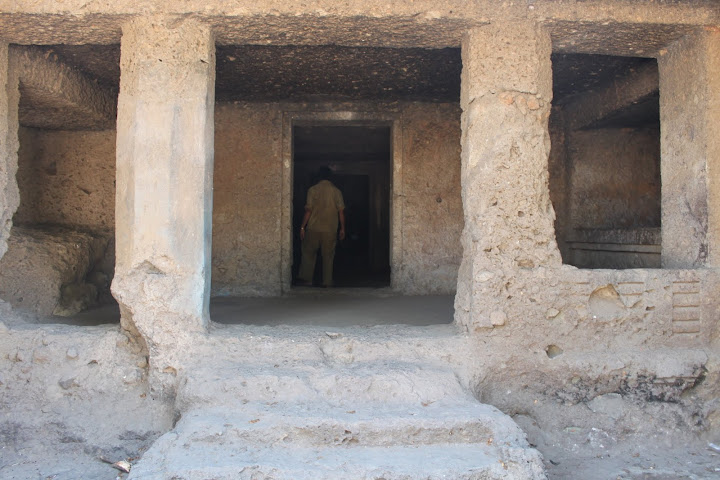
Cave 18 – Verandah is supported on two pillars and two pilasters. Stone benches are provided on left and right walls of the verandah. There is only one entry into the hall. The hall has a cell in its back wall. The door of cell is decorated. The back wall of the cell is probably converted into a Shiva temple by putting or carving a linga there however it has been removed now.
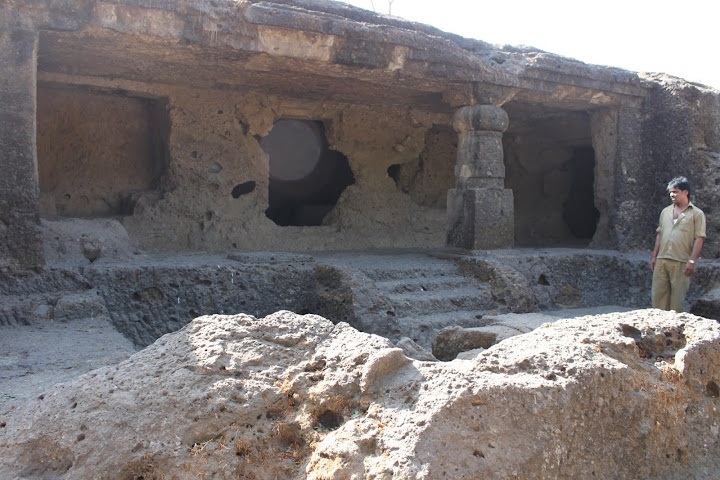
Cave 19 – This big excavation has a large verandah supported on two pillars and two pilasters. Cells were provided on the left and right wall of the verandah. Stone benches were provided on the western wall of the verandah, where, in middle, a door is provided to enter into the hall. The hall has a platform for an icon and a deep niche also to support some statue etc.
Tourist Tip – The cave complex is maintained by ASI however as this is not a ticketed monument hence not much maintenance is provided. The local defecate at the entrance hence it is very stinky however you can manage through it. Go early in morning, between 7-10 AM for better photographs and you will also avoid the local crowd.
References:
- Campbell, J M (1882). Gazetteer of the Bombay Presidency vol XIV. Government Central Press. Bombay.
- Fergusson, James and Burgess, James (1880). The Cave Temples of India. Munshiram Manoharlal. New Delhi. ISBN 8121502519.
- Qureshi, Dr Dulari (2010). Rock-cut Temples of Western India. Bharatiya Kala Prakashan. Delhi. ISBN 9788180902024.
- Soundara Rajan, K V (1981). Cave Temples of the Deccan. Archaeological Survey of India. New Delhi.
Very well documented and researched..Its resourceful document.
Well described, thanks. I guess …”The local defecate at the entrance …” is probably what keeps visitors away. Pity.
Informative..
Now the entrance area is neat & clean. The entrance ticket is Rs 20/ We have to book it by scanning the QR code.
Two portable toilets are provided for the visitors.
Some of the cave walls are damaged needs repairs.
From these caves we can see the Mumbai Metro line, and modern buildings in the nearby area. A rare meeting point of Ancient Architecture with Modern Mumbai Architecture, two millenium apart.
I had no idea about the rich history of the Kondivite and Mahakali caves! Your detailed description and stunning images really brought the place to life. I’m inspired to plan a visit and explore these hidden gems. Thank you for sharing such insightful content!
I never realized how rich the history of the Mahakali Caves was until I read your post! The details you shared about their architecture and the artwork are fascinating. I’m definitely inspired to visit and explore their significance further. Thank you for such an informative piece!
What a fascinating exploration of the Kondivite and Mahakali Caves! Your detailed descriptions and historical insights really bring the significance of these sites to life. I especially enjoyed the part about the intricate carvings—it’s incredible to think about the craftsmanship involved. Can’t wait to visit and experience it firsthand! Thank you for sharing such informative content!
I absolutely loved this post! The detailed history and vivid descriptions of the Kondivite and Mahakali Caves really bring these ancient sites to life. I can’t wait to visit and experience their beauty firsthand. Thank you for sharing such insightful information!
I really enjoyed this post! The detailed history of the Kondivite and Mahakali Caves was fascinating, and the insights into their architectural features added so much depth. I can’t wait to explore these incredible sites myself! Thank you for sharing such informative content.
Great post! I loved learning about the history and significance of the Kondivite and Mahakali Caves. The blend of architecture and spirituality is truly fascinating. Can’t wait to visit and explore them for myself!
I loved reading about the Kondivite and Mahakali Caves! The historical significance and the architectural beauty of these sites are truly fascinating. It’s amazing how such treasures exist just a short distance from the bustling city of Mumbai. I can’t wait to visit and explore them for myself! Thank you for sharing this informative post!
I thoroughly enjoyed reading about the Kondivite and Mahakali Caves! The historical insights and detailed descriptions brought these ancient sites to life for me. I appreciate the emphasis on their architectural significance and the surrounding natural beauty. It makes me want to explore them in person! Thank you for sharing such informative content.
This post beautifully captures the essence of the Kondivite and Mahakali Caves! I love how you highlighted the architectural details and historical significance. It makes me eager to explore these fascinating sites myself. Thanks for sharing such insightful information!
I absolutely loved this post! The detailed descriptions of the Kondivite and Mahakali Caves really brought their history to life for me. The photos were stunning and made me want to visit them on my next trip to Mumbai. Thank you for sharing such insightful information!
I loved reading about the Kondivite and Mahakali Caves! The historical significance and architectural details are fascinating. I can’t wait to plan a visit and explore these hidden gems in Mumbai. Thank you for such an informative post!
This post beautifully captures the essence of the Kondivite and Mahakali Caves! I love how it highlights not just the historical significance but also the architectural marvels. I can’t wait to visit and experience the serene atmosphere you described. Thanks for sharing such detailed insights!
This post beautifully captures the essence and history of the Kondivite and Mahakali Caves! I had no idea about the fascinating stories behind these ancient sites. The detailed descriptions and vivid imagery made me feel like I was right there exploring the caves. Can’t wait to visit and experience it for myself! Thanks for sharing such enlightening content!
I’ve always been fascinated by the rich history of the Mahakali Caves! The way you’ve described their architectural features really brings them to life. I can’t wait to visit and experience their beauty in person. Thank you for sharing such insightful details about this hidden gem!
What a fascinating insight into the Kondivite and Mahakali Caves! I never knew about the rich history and architectural significance of these sites. Your descriptions and historical context have inspired me to plan a visit soon. Thank you for sharing such valuable information!
This is such an intriguing post! I’ve always been fascinated by the history and architecture of the Kondivite and Mahakali Caves. Your detailed descriptions and insights really brought the sites to life. I can’t wait to plan a visit and experience the beauty you’ve captured in your writing!
I never realized how rich the history of the Kondivite and Mahakali Caves was! Your detailed descriptions and insights really brought these ancient sites to life for me. I’m inspired to plan a visit and explore their fascinating art and architecture. Thank you for sharing such valuable information!
I loved reading about the Kondivite and Mahakali Caves! The historical significance and architectural styles are fascinating. It’s amazing how much history is hidden in places like Mumbai. I can’t wait to visit and explore these caves for myself!
I loved reading this post! The details about the Kondivite and Mahakali Caves really brought the history and architecture to life. I can’t wait to plan a visit and explore these hidden gems in Mumbai. Thank you for sharing such insightful information!
This post beautifully captures the historical significance and architectural marvel of the Kondivite and Mahakali Caves. I had no idea about the hidden gems within these sites! Your insights on their artistic features and the context of their creation were enlightening. Can’t wait to explore them myself!
Thank you for this insightful post! I had no idea about the rich history and architectural beauty of the Kondivite and Mahakali Caves. Your descriptions really brought the locations to life, and I’m eager to visit them now. Keep sharing such wonderful content!
Exploring historic places like these highlights how cultural memory is preserved, much like sharing happy birthday wishes in marathi keeps family traditions alive through generations.
I recently adapted a traditional blessing for a family birthday and it felt sincere, reminding me how heritage lives in small everyday words.
A practical takeaway is to include a short traditional blessing in celebrations so history and emotion stay connected.
What a fascinating read! I had no idea about the historical significance of the Kondivite and Mahakali caves. The descriptions of the carvings and the insights into their architectural styles were particularly captivating. I can’t wait to visit and experience their beauty firsthand!
This post beautifully captures the essence of the Kondivite and Mahakali Caves! I loved the historical insights and the stunning images – they really made me want to visit. The blend of history and nature in Mumbai is truly fascinating!
Absolutely loved this post! The detailed descriptions of the Kondivite and Mahakali Caves bring out the rich history and incredible artistry. It’s fascinating to learn about the intricate carvings and their significance. Can’t wait to explore these hidden gems myself! Thank you for sharing this informative piece.
I thoroughly enjoyed reading your post on the Kondivite and Mahakali Caves! The historical significance and architectural details you’ve highlighted really bring these sites to life. I’d love to plan a visit soon, especially after learning about their unique features. Keep up the great work with your insights!
This is a wonderful
The two names are a useful example of how a place can carry different identities across local usage and historical writing. Noting that the caves are now called Mahakali while Campbell used Kondivite or Kondivti because of the nearby village helps readers avoid assuming that differing labels refer to separate sites. A brief note on the chronology of those names would make the entry even easier to use for researchers and visitors comparing older sources. Clear naming context is essential for preserving historical traceability.
A useful text-style tool should make it easy to test whether a design still communicates clearly at a glance. For names, short announcements, and social captions, letras cursivas can create emphasis while keeping the original wording intact. It also helps to use decorative characters sparingly: one distinctive line often has more impact than making every sentence difficult to scan or copy.
Clear HR information is most useful when it turns a complicated process into a practical next step. For small and midsize teams, a resource library that covers hiring, pay, performance, and compliance in plain language can make it easier to spot what needs attention before a decision becomes urgent. Folio HR is a useful example of that kind of focused, accessible reference point.
Great breakdown of Prosciutto Italiano. For food blogs, turning recipe videos into stills is handy; I use Invisible Text Copy & Paste to grab clean frames for step shots. Works well by interval or frame count.
A useful UPS decision starts with the load, not the product label. List the devices that truly need power during an outage, estimate their combined wattage, and decide whether the goal is a clean shutdown or continued operation. Battery Backup Picker frames those questions alongside runtime and battery topology, which makes comparisons more meaningful than simply choosing the largest VA rating. That perspective can help buyers distinguish surge protection, short shutdown coverage, and the longer backup capacity needed for essential equipment.
Bei der Personalentwicklung geht es oft darum, Bilder und Profile konsistent zu gestalten. Da fand ich StickerFaster spannend: Ein foto to Sticker photo to Sticker erzeugt direkt ein 4×3-Blatt mit zwölf KI-Stickern inklusive Prüfung und Zuschnitt. Für Teams, die einheitliche Motive brauchen, spart das im Recruiting-Prozess echt Zeit.